
BrassNoor Bible · Volume II, Chapter 1
Understanding the country, the city of Fes, the working environments of artisans, and the knowledge behind handmade Moroccan brass lighting.
Introduction: Beyond the Finished Lamp
A handmade brass lamp is more than an object made from metal. Behind its shape, ornament and light are materials, practical knowledge, skilled hands and a working environment that influences how craftsmanship is practised and transmitted.
To understand Moroccan brass lighting, we must look beyond the finished product. We must consider the country in which the craft takes place, the cities associated with metalworking, the spaces in which artisans work, and the people whose experience transforms raw material into finished objects.
For BrassNoor, Morocco is not simply a country of origin printed on a label. It is the cultural and working environment in which our relationship with brass, ornament and light takes shape.
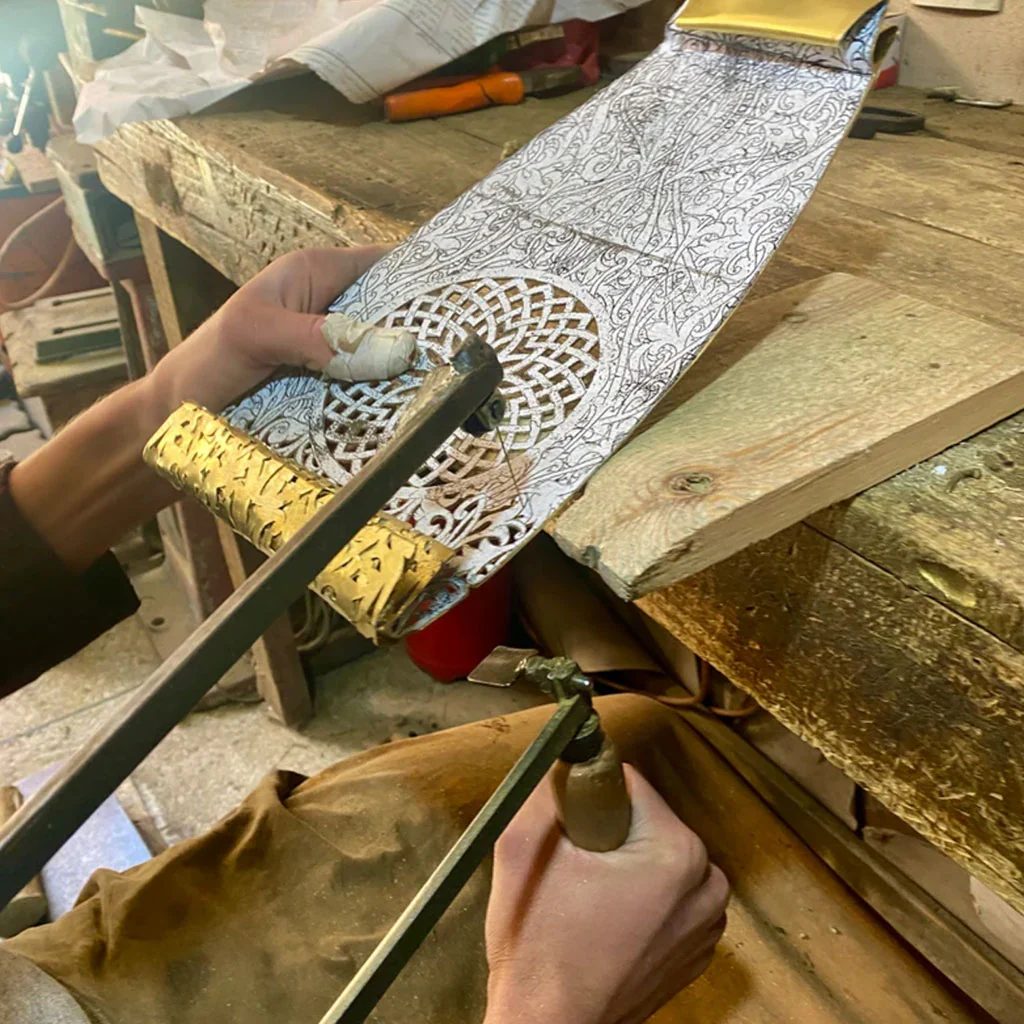
This chapter introduces that wider context. It also establishes an important principle for the BrassNoor Bible: Moroccan craftsmanship should be documented with respect for its diversity, accuracy about its origins, and recognition of the artisans who continue to practise and develop it.
1. Morocco: A Diverse Landscape of Craftsmanship
Morocco has a rich and varied craft landscape. Its traditional and contemporary crafts include metalwork, ceramics, woodworking, textiles, leatherwork and architectural decoration.
These activities involve different materials, skills and working methods. They should not be treated as one uniform tradition or reduced to a single decorative style.
Craft develops through the relationship between materials, practical experience, local environments and the needs of the people who make and use objects. Some practices preserve established techniques, while others adapt existing knowledge to new forms, tools and purposes.
This diversity matters when discussing Moroccan brass lighting. A lamp may share visual characteristics with other Moroccan decorative objects, but that does not automatically mean it was made using the same methods or has the same historical origins.
To understand an object accurately, we need to consider what it is made from, how it was produced, where it was made and what the artisan intended to achieve.
For BrassNoor, this is the starting point of responsible documentation: to celebrate Moroccan craftsmanship without presenting every object, city or workshop as identical.
2. Fes: A Historic Environment of Craftsmanship
Fes occupies an important place in the cultural and craft heritage of Morocco.
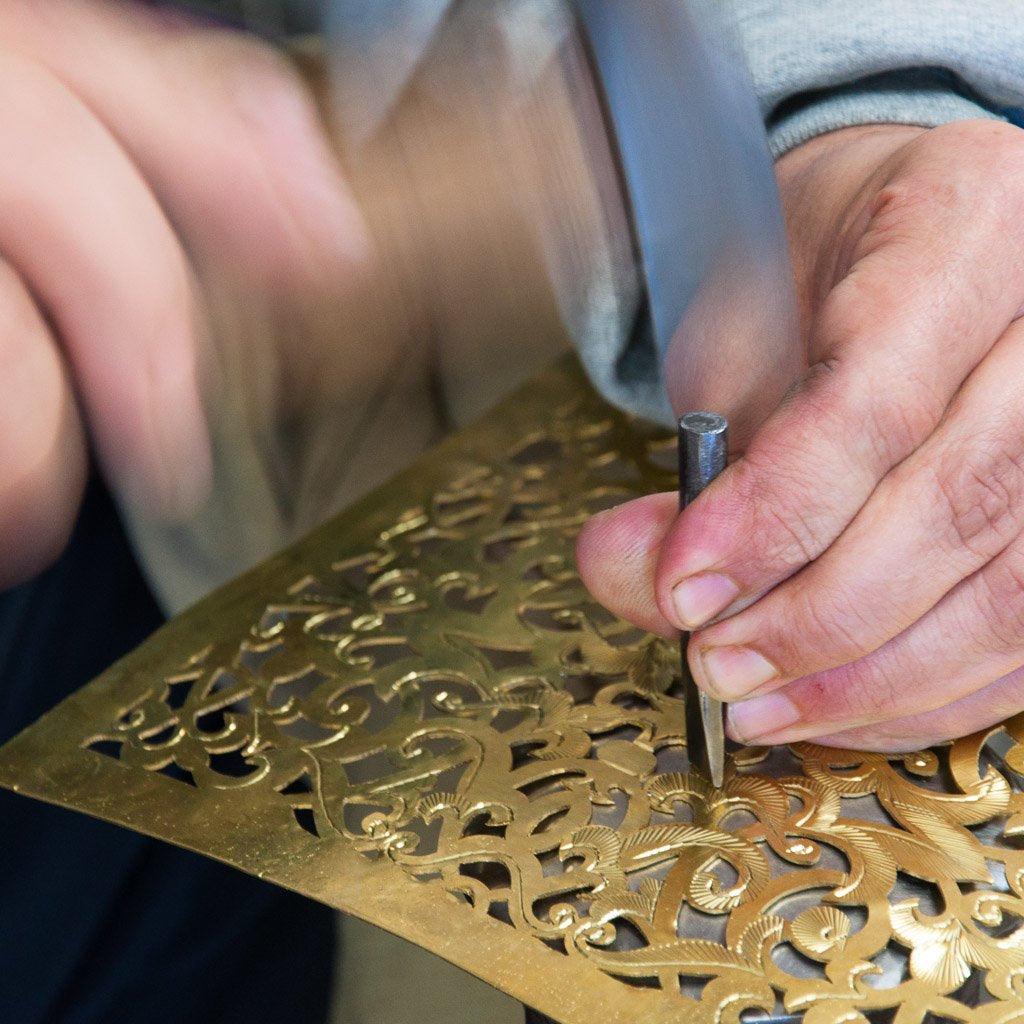
Its historic medina preserves an urban environment that developed over many centuries. Architecture, commercial activity, religious and educational institutions, residential spaces and traditional occupations contribute to the city's distinctive character.
The Medina of Fes was inscribed on the UNESCO World Heritage List in 1981. Its historic urban fabric provides an important context for understanding how architecture, skilled work and everyday life have existed alongside one another.
For craftsmanship, the significance of Fes extends beyond the presence of finished objects in shops. The city also provides a context for understanding the places where artisans work, the relationships between workshops and their surroundings, and the knowledge required to produce objects by hand.
The traditional medina contains a close relationship between working life and the urban environment. Workshops and commercial spaces may form part of streets and shared areas where craft production, the display of goods and daily social interaction occur together.
However, Fes should not be understood as a single, unchanging craft environment. The organisation of work has evolved, and artisans operate in different types of spaces today.
Understanding these differences helps us document the city's craft traditions without confusing historical environments with modern working arrangements.
3. The Traditional Funduq: Craftsmanship in a Shared Environment
One important aspect of the traditional craft environment described through BrassNoor's local knowledge is the funduq, plural fnadeq. The word is written and pronounced in different ways: you may also encounter fandeq, foundok, foundoq or the French-influenced spelling fondouk. These variants reflect differences in pronunciation and transliteration rather than necessarily referring to different kinds of building.
In the setting you described, a funduq could bring together a group of individual shops or workshops within one shared place. Artisans worked in their own spaces, often carrying out activities in front of their shops and displaying finished goods outside.
The working environment was therefore visible. Visitors and passers-by could encounter the artisans, observe aspects of their work and see the objects they produced.
The funduq was not merely a physical arrangement of shops. In this account of traditional working life, it also formed part of a social environment in which craftspeople worked near one another.
The proximity of workshops created opportunities for interaction, mutual understanding and coordination. Artisans shared a place in which their activities existed alongside those of other craftspeople, contributing to an atmosphere shaped by work, commerce and human relationships.
The environment you described was one of activity and exchange: artisans working in front of their shops, goods displayed outside, and a shared atmosphere in which cooperation and an understanding between craftspeople formed part of everyday life.
This offers a valuable perspective on craftsmanship. The work was not always hidden behind closed doors. It could be visible within the life of the medina, where the relationship between the artisan and the surrounding environment was part of the experience.
The social dimension of the workshop
When discussing craftsmanship, it is easy to concentrate exclusively on techniques, tools and finished products. Yet the environment in which people work can also influence how knowledge is shared and how professional relationships develop.
In a shared craft setting, artisans may encounter one another regularly, observe different activities and develop relationships through proximity and everyday interaction.
These observations should not be interpreted as proof that every funduq operated in the same way. Individual places differed, and their histories require specific documentation.
For BrassNoor, the important point is that the traditional craft environment of Fes can be understood not only through its buildings and products, but also through the relationships between the people who work within it.
Editorial note: This account of the funduq reflects workshop and local knowledge shared with BrassNoor. The organisation and historical role of individual fnadeq should be documented separately where more specific historical claims are made.
Notable historic fundouks in Fes el Bali
The historic medina contains many fundouks, and each building has its own history. The examples below help illustrate the variety of these places; they should not be taken as proof that every funduq served the same purpose or operated in the same way.
- Funduq al-Najjarin (Nejjarine Fondouk): Dated to 1711, this prominent funduq stands beside Nejjarine Square. Its restored building now houses the Nejjarine Museum of Wooden Arts and Crafts. Discover Islamic Art: Nejjarin Funduq.
- Funduq Staouniyine (also known as Funduq al-Tetwaniyyin): A historic funduq associated with merchants from Tetouan and dated to the 14th century in published accounts. Following restoration, it has been used as a cultural and commercial space for artisans. A+E Magazine: Fanadik Fès.
- Funduq Chemmaïne and Funduq Sbitriyyin: Two adjoining historic buildings near Al-Qarawiyyin, described in travel and heritage sources as a connected complex. The names are associated with the surrounding candle-makers’ and related craft streets. Lonely Planet: Chemmaine-Sbitriyine Funduq.
- Funduq Kaat Smen: A funduq identified in local guides with the historic trade in food staples. The details of its trading history should be treated cautiously unless supported by a specialist heritage source. Riad Jamai: Les fondouks de Fès.
- Funduq Labbada: A funduq near Bab Guissa that local heritage guides associate with the processing and drying of sheepskins and wool. More detailed claims about its history require additional specialist verification. Amazing Fes: Les fondouks.
These examples also show why the word funduq should not be reduced to a single function. Historic fundouks could be associated with lodging, storage, commerce or craft activity, and the role of a specific building must be established from evidence about that place.
4. Modern Workshops: Space, Privacy and Practical Advantages
The working environment of craftsmanship has also changed.
According to the local knowledge shared with BrassNoor, many newer workshops and manufacturing spaces are situated outside the old medina. Ain Nokbi is an example of an area associated with this more modern working environment.
These spaces may offer larger areas for production, storage and handling materials. They can also provide practical advantages for moving goods and organising transport.
Compared with the compact and interconnected spaces of the old medina, larger workshops may allow activities to take place within a more self-contained environment.
However, this organisation can make the work less visible from outside. A workshop may operate behind a closed door, and it may be difficult for a passer-by to know whether the activity inside involves metalwork, leatherwork or another craft.
The difference is therefore not simply architectural. It also concerns how the working environment relates to the surrounding community.
In the traditional setting described above, craft activities could form part of a shared public atmosphere. In a modern industrial area, production may take place within independent spaces, with greater separation between the workshop and everyday public life.
Two environments, different advantages
The two environments can be compared without assuming that one is inherently better than the other.
| Traditional craft environment | Modern workshop environment |
|---|---|
| Workshops may be closely grouped within a shared setting. | Workshops may occupy larger, independent spaces. |
| Craft activity can be visible from the surrounding streets or shared areas. | Production may be less visible from outside. |
| Artisans work in proximity to other craftspeople and businesses. | Work may be organised within more self-contained premises. |
| The environment can support frequent social interaction. | Larger spaces may support storage, production and handling. |
| Moving goods through compact historic streets can present practical challenges. | Transport and movement of goods may be easier in suitable locations. |
These are broad distinctions based on the working environments described to BrassNoor, not universal rules. Traditional workshops can face different conditions from one another, and modern workshops can also maintain strong relationships between artisans.
The purpose of this comparison is to understand how different spaces influence the experience and organisation of craft.
A larger workshop does not necessarily mean less skill, just as a traditional setting does not automatically guarantee a particular quality of workmanship. The quality and character of an object must be understood through the work itself.
5. Fes and the Wider Geography of Moroccan Metalwork
Fes is a central reference point for BrassNoor's understanding of Moroccan brass lighting. According to the workshop knowledge shared with us, most of the lighting associated with this production context is made in Fes, with some work also taking place in the surrounding area.
Nevertheless, metalworking is not exclusive to Fes.
Marrakech is another city associated with Moroccan metalwork. Craft activities involving metal are also found in other cities, including Tetouan and Casablanca, although the extent and nature of these activities vary.
These places should not automatically be assumed to share identical techniques, decorative approaches or workshop structures. Their practices require their own documentation.
Why the place of production matters
The place where a lamp is made is part of its story. It can help readers understand the working environment, the people involved in its production and the specific context from which the object emerges.
For this reason, BrassNoor should identify the origin of its products as precisely as the available information allows.
When a lamp is made in Fes, we should say so when that origin is verified. When a product is made elsewhere in Morocco, its actual origin should be respected rather than replaced by a more recognisable city name.
This distinction is important for international customers, interior designers, researchers and anyone seeking to understand Moroccan craftsmanship beyond its visual appearance.
A responsible account of craft should not treat Morocco as a single workshop or assume that every Moroccan lamp comes from the same place.
Instead, it should recognise the wider geography of production while documenting the specific workshop behind each object whenever possible.
6. Understanding Brass and Moroccan Metalwork
Metalworking is an important part of Morocco's broader craft landscape. The country's decorative and functional metal objects demonstrate how metal can be shaped into vessels, architectural details, decorative pieces and lighting.
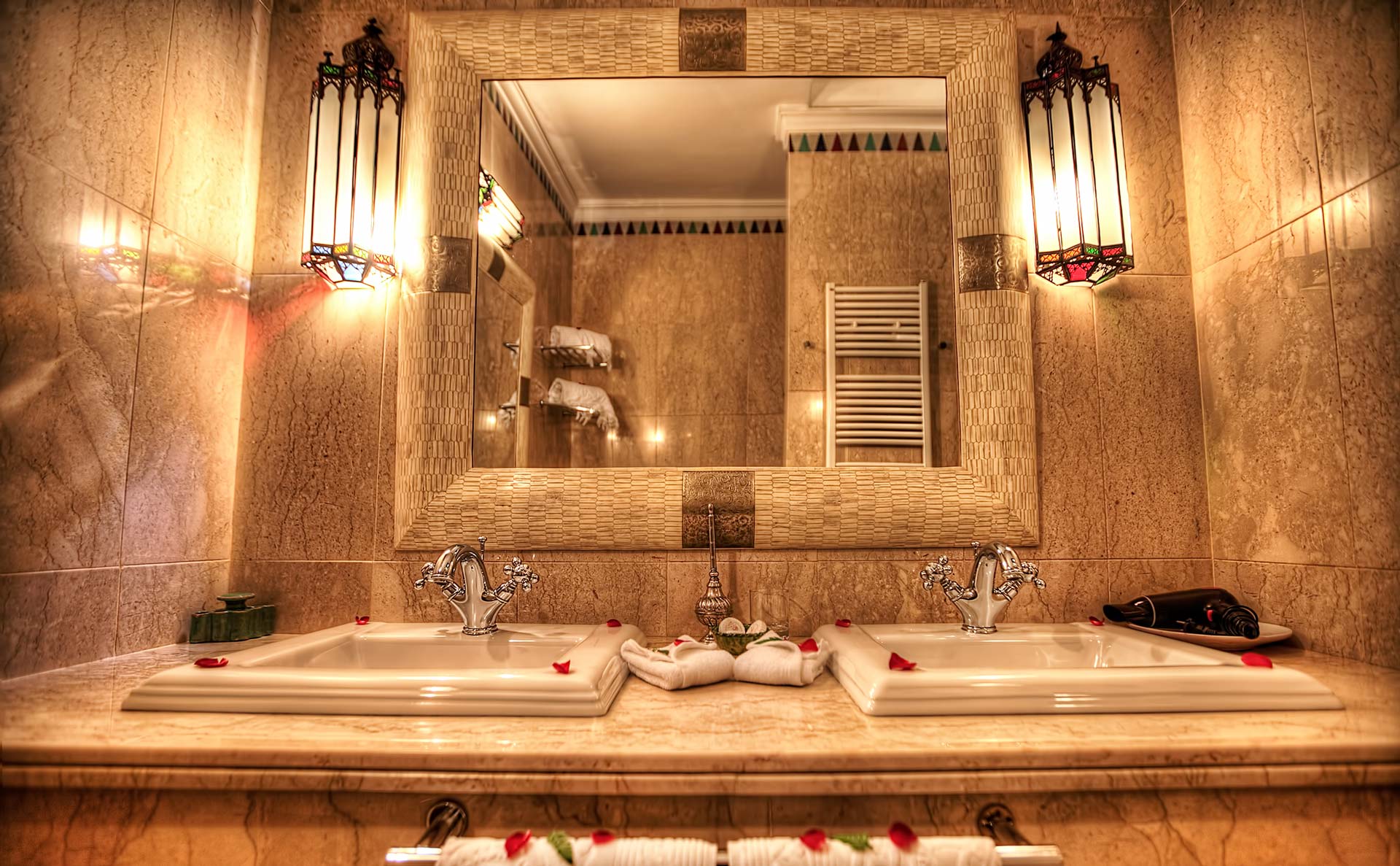
Brass and copper are related but distinct materials. Brass is an alloy primarily of copper and zinc, while copper is a different metal. Their properties and appearances depend on the material itself and, where relevant, its composition and surface treatment.
In lighting, metal serves both practical and visual purposes. It contributes to the structure of the object while providing a surface that can be shaped, pierced, engraved or otherwise decorated according to the design and the techniques used.
The relationship between material and workmanship is particularly important in handmade lighting. The properties of the sheet metal, the complexity of a design and the intended form all influence the work required to create the finished object.
Yet we should not assume that every Moroccan metalworker uses the same material, tools or procedures. The methods involved depend on the particular object and the artisan's practice.
For BrassNoor, this is why workshop documentation matters. General information can explain the material, but the specific process should be recorded through reliable evidence and the experience of the people who actually perform the work.
The detailed stages of brass preparation, pattern transfer, piercing, engraving, shaping, assembly and finishing belong in the dedicated workshop volume of the BrassNoor Bible.
7. Ornament, Material and Light
Moroccan decorative traditions include a wide range of geometric arrangements, repeated motifs and intricate surface details. These forms appear across different materials and artistic contexts, including architecture and decorative objects.
However, Moroccan ornament is not a single, universal pattern language. Motifs may differ according to their medium, location, purpose and maker.
A pattern found in architectural decoration should not automatically be assumed to have the same meaning when used on a metal lamp. Similarly, a contemporary design inspired by Moroccan ornament should not be presented as an exact historical reproduction unless that relationship can be established.
In pierced brass lighting, ornament also creates a relationship between solid material and empty space.
The metal forms the structure of the lamp, while its openings determine where light can pass through. Once illuminated, these openings can produce patterns of light and shadow on nearby surfaces.
The result depends on several factors, including the design of the openings, the form of the shade, the light source and the surrounding environment.
This makes pierced brass particularly interesting as a design material. The ornament is not only something to look at on the surface of an unlit lamp. It also influences the atmosphere created when the lamp is switched on.
For BrassNoor, the relationship between material, pattern and light provides a meaningful connection between craft heritage and contemporary interior design.
We can explore that relationship without claiming that every pattern is ancient or that every modern lamp reproduces a historical object.
8. The Maalem: Knowledge, Experience and Innovation
The Maalem is an essential reference point in BrassNoor's understanding of craftsmanship.
Practical knowledge develops through experience: learning how materials respond, understanding the requirements of different designs, recognising potential difficulties and making decisions during production.
Some of this knowledge can be explained through written instructions. Other aspects may be easier to understand through demonstration, observation and conversation with the artisan.
For BrassNoor, Maalem Mohamed is particularly important because, according to the information you shared, he knows the techniques used in the workshop and continues to develop new ideas and designs.
His role therefore extends beyond following an established sequence of operations. His experience can also contribute to experimentation, problem-solving and the creation of new forms.
Recording practical knowledge
A meaningful record of the craft should explain more than the name of a technique. Where possible, it should document:
- What the technique is used for.
- Which materials and tools are involved.
- How the artisan approaches the work.
- What decisions must be made during the process.
- What difficulties can arise and how the artisan responds.
- Which details depend on the particular design.
- Whether a method reflects established workshop practice or a newer adaptation.
This approach allows readers to understand the reasoning behind the work, rather than seeing only a list of steps.
It also protects an important distinction: the knowledge of one experienced artisan should not automatically be presented as the universal practice of all Moroccan workshops.
Tradition and innovation
Tradition and innovation do not necessarily contradict one another.
An experienced artisan may rely on accumulated practical knowledge while developing a new design or adapting a technique to a different form. New work can emerge from a deep understanding of existing materials and methods.
In Maalem Mohamed's case, the opportunity is to document both the techniques he practises and the ways he develops new work.
When a design is a modern creation or adaptation, that fact should be recorded honestly. It does not diminish the value of the work. Instead, it helps explain how craftsmanship remains active and responsive to contemporary needs.
For BrassNoor, this documentation is a long-term responsibility: to preserve practical knowledge, recognise the artisan's contribution and distinguish verified workshop information from broader historical claims.
9. Heritage as a Living Practice
Heritage is not preserved only through old buildings or objects displayed in museums. It can also continue through people who practise skills, pass on knowledge and create new work.
A craft tradition may retain important techniques while adapting to changes in materials, working environments, customer requirements and design preferences.
This does not mean that every modern object is automatically traditional, nor that every change represents a loss of authenticity.
The important question is how the relationship between an object and its heritage is described.
A handmade lamp may use skills associated with Moroccan metalworking while having a contemporary shape. A design may draw inspiration from a traditional visual language without reproducing a documented historic object.
Both can be valuable, provided their origins and characteristics are represented accurately.
For BrassNoor, authenticity requires honesty about the material, the making process, the people involved and the relationship between the design and the tradition it references.
It also requires recognising what remains unknown. If a motif's historical origin has not been verified, we should not invent one. If a particular method belongs to Maalem Mohamed's own practice, we should not automatically attribute it to every artisan in Morocco.
Responsible documentation allows heritage to be respected without turning it into a collection of unsupported claims.
10. Why This Context Matters to BrassNoor
BrassNoor's work belongs to a wider Moroccan craft landscape, but its responsibility is specific: to document and present the brass lighting it offers, the artisans involved in its creation, the techniques that can be verified and the ways these objects interact with contemporary spaces.
This requires connecting three perspectives.
Heritage
The broader cultural and historical context of Moroccan craftsmanship, supported by reliable sources and careful interpretation.
Workshop knowledge
The practical experience of artisans such as Maalem Mohamed, documented through explanations, demonstrations and authentic visual records.
Contemporary design
The forms, uses and interior settings through which handmade brass lighting finds a place in modern homes, hospitality spaces and other environments.
These perspectives are related, but they are not interchangeable. Historical documentation cannot replace an artisan's explanation of a practical technique, and workshop experience alone cannot establish every historical claim about Moroccan ornament.
BrassNoor's role is to bring these sources of knowledge together while preserving their distinctions.
This approach can also help international customers and designers understand more than the appearance of a lamp. They can learn about its material, its origin, the work behind it and the design decisions that shape its relationship with light.
The objective is not to make every product carry an elaborate historical story. It is to make the available information accurate, meaningful and useful.
Conclusion: Understanding the Land Behind the Craft
Morocco provides the wider cultural setting for the craft. Fes offers an important historical and working context. The traditional fnadeq described through BrassNoor's local knowledge reveal one way artisans and businesses have shared a working environment, while modern workshops illustrate how production can take place in different spaces with different practical advantages.
The wider geography of Moroccan metalwork reminds us that craftsmanship is not exclusive to one city. The material itself introduces another layer of understanding, while ornament and light demonstrate how practical workmanship can become part of a designed environment.
At the centre of this story are the artisans whose knowledge makes the work possible.
Through Maalem Mohamed and the BrassNoor workshop, there is an opportunity to document the craft at first hand: the techniques, the decisions, the terminology and the innovations that might otherwise remain known only through practice.
For BrassNoor, understanding the land behind the craft is therefore the beginning of a larger commitment. It means preserving knowledge, respecting the people who hold it and explaining Moroccan brass lighting in a way that connects heritage, craftsmanship and contemporary design without confusing fact with interpretation.
The lamp is the finished object. The craft is the knowledge behind it. The BrassNoor Bible exists to document both.
← Return to the BrassNoor Bible index
Sources and editorial methodology
Institutional reference
- UNESCO World Heritage Centre, Medina of Fes: https://whc.unesco.org/en/list/170/
- Chambre d’Artisanat de la Région Fès-Meknès (CARFM): official directory of regional craft chambers, with information about artisan trades and craft activity in the Fès-Meknès region. The Ministry directory identifies the Fès-Meknès chamber and provides its published contact details and listed website.
This source supports the historical and heritage context of the Medina of Fes. It should not be used by itself to substantiate specific claims about the organisation of individual funduqs or the working methods of present-day brass workshops. The additional links in the fundouks section provide more specific context for the named buildings; sources vary in depth, so details not confirmed by a specialist heritage source are explicitly qualified.
Workshop and local knowledge
The following elements in this chapter are based on information shared directly with BrassNoor:
- The description of traditional fnadeq as shared environments for artisans and shops.
- The comparison between the old medina's working environment and newer workshops outside it.
- The practical advantages associated with larger workshops and transport.
- The account of Fes as the main production context for the lighting discussed here.
- The identification of Maalem Mohamed as an experienced practitioner who knows the workshop's techniques and develops new designs.
These points should be attributed to BrassNoor's workshop knowledge when published as first-hand accounts. Specific historical claims about the funduq, individual neighbourhoods or the development of particular techniques require additional corroboration where appropriate.
Editorial principles
- Do not invent historical origins for patterns or lamp designs.
- Distinguish workshop testimony from independently documented history.
- Identify the actual place of production whenever it is verified.
- Document Maalem Mohamed's techniques through his explanations and demonstrations.
- Distinguish established workshop practice from new adaptations and designs.
- Correct terminology and technical descriptions with the artisan before treating them as definitive.
- Preserve uncertainty where evidence is incomplete rather than filling gaps with assumptions.