
The quiet beauty of the old city — clean Moroccan geometry from the historic medina of Fes.
The visual language of old Fes
The old medina of Fes is one of the great urban compositions in the world: narrow streets that filter the sun, courtyards that hold quiet light, carved doors, and geometry that repeats with endless variation — never loud, always balanced. Moroccan craftsmanship at its best is not ornament for its own sake. It is proportion, rhythm, and restraint.
The Medina Collection interprets that visual language through light. The pieces here are geometric and architectural: octagrams, restrained piercing, and clean brass surfaces that cast filtered, patterned light. Where the Sahara collection is warmth and intimacy, Medina is clarity and calm — proof that Moroccan craft can be minimal, elegant, and utterly contemporary.
The design language
Geometry
Octagrams, grids, and repeating motifs drawn from the architectural ornament of the medina — precise, never chaotic.
Balance
Composed silhouettes and even light distribution; nothing shouts, everything holds.
Refinement
Clean brass surfaces and careful finishing — the luxury is in the proportion, not the decoration.
Shadow
Filtered light through geometric piercing; shadow as quiet pattern rather than drama.
Selected lights from the Medina Collection
Geometric, architectural pieces for rooms that value calm — a deliberately small, curated selection.

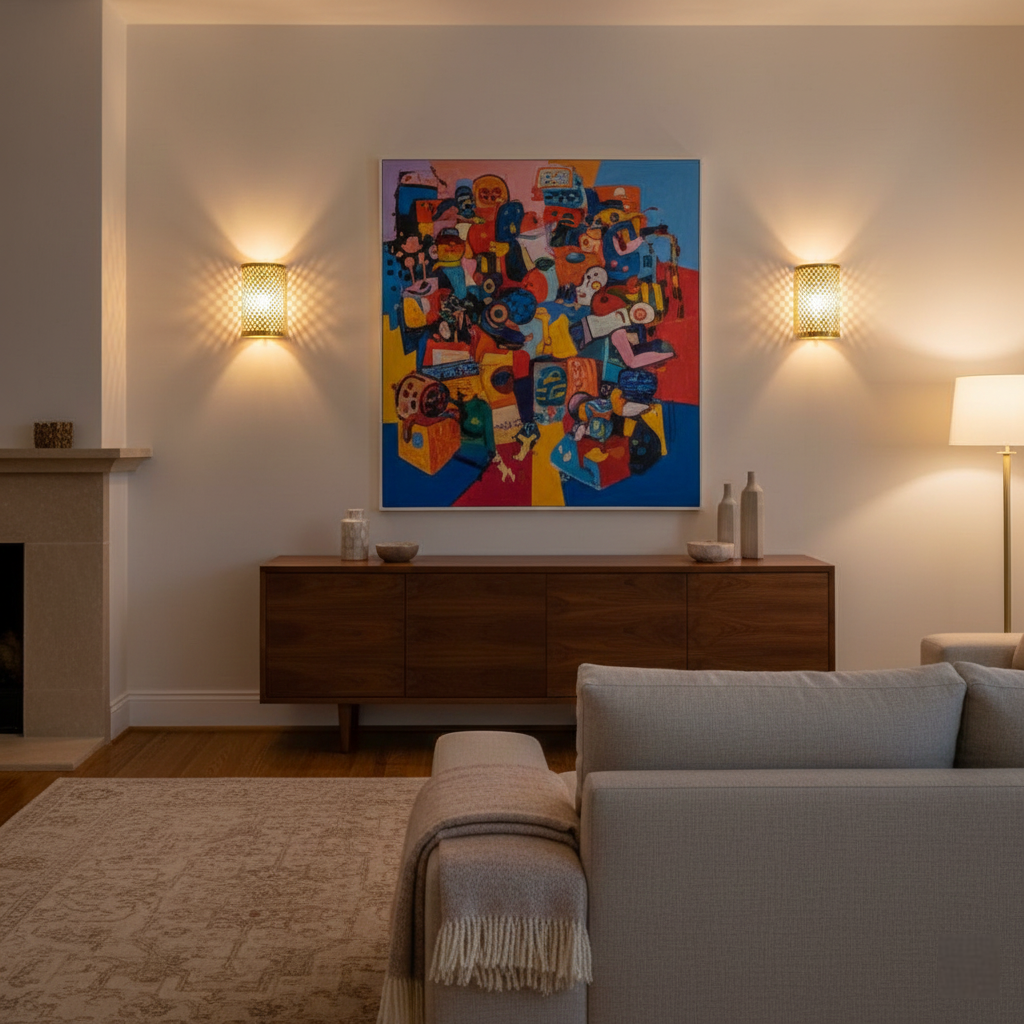
Explore Medina lighting by type
Where Medina light belongs
- Hallways and entryways
- Bedrooms
- Living rooms and dining spaces
- Apartments and boutique interiors
- Contemporary Moroccan homes
Handmade, always
Every BrassNoor light is pierced, shaped, and finished by hand in our Fes workshop. Patterns are transferred onto brass, cut and pierced by hand, then shaped, engraved, assembled, and polished — a sequence of gestures passed from master to apprentice. No two pieces are exactly alike, and that is the point.
The geometry behind the collection
To understand what these patterns mean — and how they are drawn, transferred, and pierced — start here: