

The art of Moroccan light, shadow, and atmosphere
During the day, a handmade Moroccan brass pendant is an object of craftsmanship. You notice its warm metal, the geometry of its pierced surface, and the details shaped by the hands of the maker.
After dark, something changes.
The light passes through the openings in the brass, projecting patterns across nearby walls, ceilings, furniture, and floors. Geometric shapes emerge from darkness. Ordinary surfaces become part of the lighting design. The room develops a different atmosphere without changing a single piece of furniture.
This is the distinctive appeal of pierced brass lighting: it does not simply illuminate a space. It gives light a visible pattern.
At BrassNoor, we explore this relationship between Moroccan craftsmanship, material, and contemporary interiors. Understanding how pierced brass transforms a room can help homeowners and interior designers choose lighting that does more than brighten a space.
1. What Happens When a Pierced Brass Pendant Is Switched On?
A pierced brass pendant works through the relationship between three elements: the light source, the openings in the metal, and the surfaces surrounding the fixture.
The brass shade partially blocks the light while allowing it to pass through its pierced patterns. Depending on the design, the result may include concentrated points of light, geometric projections, softer areas of illumination, and distinctive shadows.
The effect changes with the room.
A pendant positioned near a plain wall may create a more visible pattern than one surrounded by busy wallpaper. A fixture in a room with darker finishes may produce a different visual contrast from the same pendant in a bright, white interior.
Distance matters, too. The position of the lamp relative to the wall, ceiling, and furniture influences the scale and sharpness of the projected pattern.
This is why pierced brass lighting is particularly interesting after sunset. The fixture becomes part of the room’s visual experience, rather than remaining only a decorative object.
The pattern is not a separate decoration added to the interior. It is created by the light itself.
2. Why Handmade Piercing Makes a Difference
The character of pierced brass lighting begins long before the bulb is switched on.
In traditional Moroccan metalworking, decorative patterns are cut or pierced into metal to create openings that control how light passes through a shade. Depending on the design and workshop technique, the surface may also feature engraving, hammering, or other decorative details.
The resulting object combines two functions: it shapes the light and expresses the craftsmanship of the metal itself.
Pattern is part of the design
The size, spacing, density, and arrangement of the openings influence the lighting effect.
A shade with relatively open patterns may allow more light to pass through its surface. A design with smaller or denser openings may create a more intricate distribution of light and shadow.
Neither is automatically better. The appropriate choice depends on the atmosphere, brightness, and visual effect desired.
Handmade character versus mass production
Machine-produced shades can offer consistency and precise repetition, which are valuable qualities in many interiors.
Handmade pierced brass brings another dimension: the human process behind the object, the craftsperson’s handling of the material, and the distinctive character of the finished piece.
Depending on the method used, handmade work may contain subtle variations in the details. These variations should not be confused with a guarantee that every handmade pattern is irregular or that every machine-made shade is uniform. The distinction lies in the making process, the design, and the character of the individual piece.
For BrassNoor, the appeal is the combination of functional lighting and Moroccan metalworking craftsmanship. The pendant has a presence even when it is switched off, and a different presence once the light begins to pass through its surface.
3. Three Room Moods Created by Pierced Brass
The same type of pendant can contribute to very different interiors. Its effect depends on the design, the bulb, the surrounding materials, and how the fixture is positioned.
Mood One: Warm and Intimate
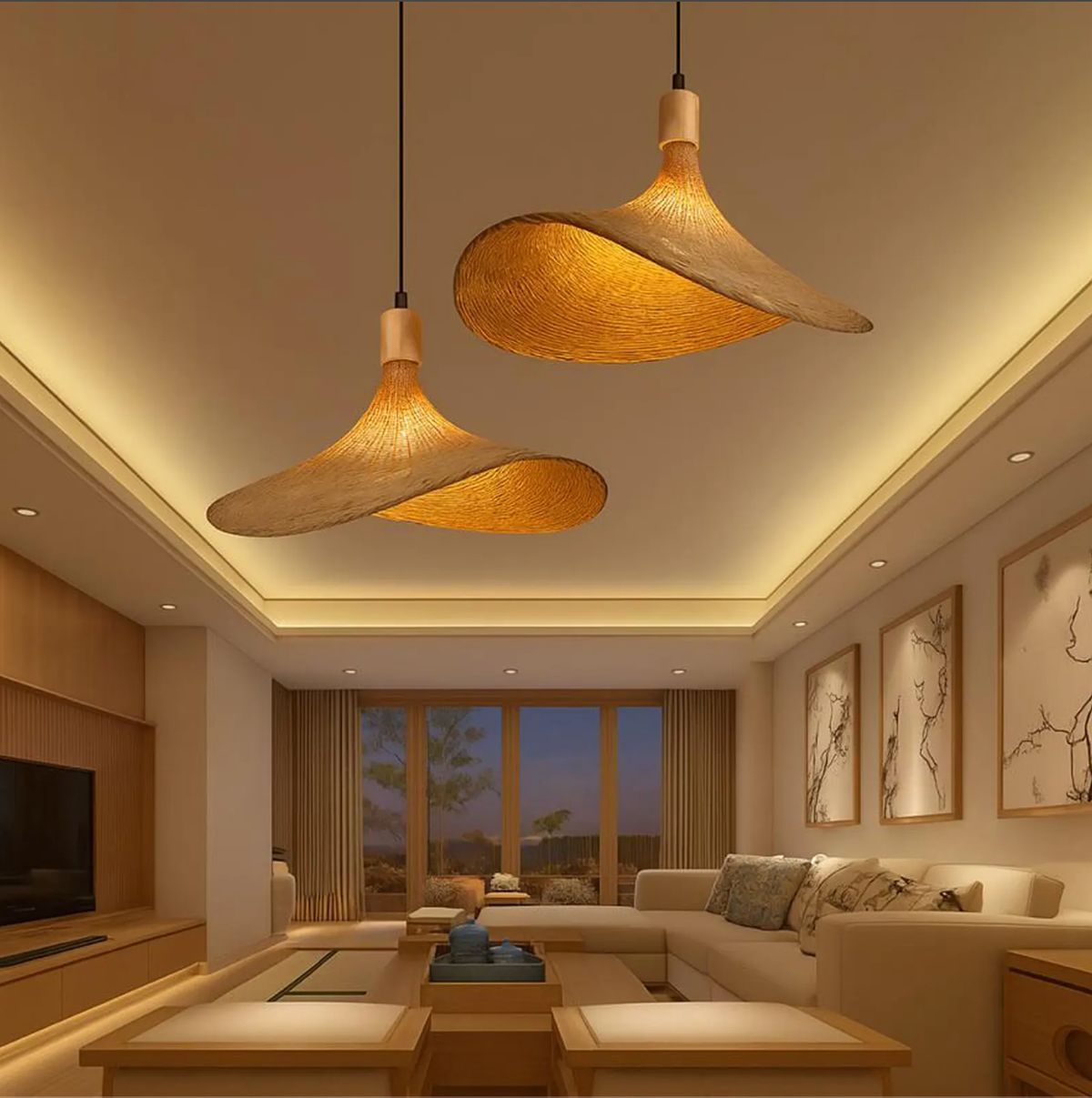
In a dining room or living area, pierced brass can introduce a sense of intimacy after dark.
Warm-toned lighting, natural wood, textured plaster, linen, and muted colours can complement the golden appearance of brass. The patterned light adds another layer to the space, creating visual interest without requiring additional decoration.
A pendant above a dining table can help define the dining area within an open-plan interior. In a living room, a similar fixture may draw attention towards a seating area or a particular architectural feature.
For this mood, the goal is not necessarily maximum brightness. It is a comfortable balance between useful illumination and the atmosphere created by the shade.
Design tip: Consider a warm-white bulb and a separate source of general room lighting. The pendant can then contribute its distinctive pattern without being expected to illuminate every corner by itself.
Mood Two: Sculptural and Contemporary
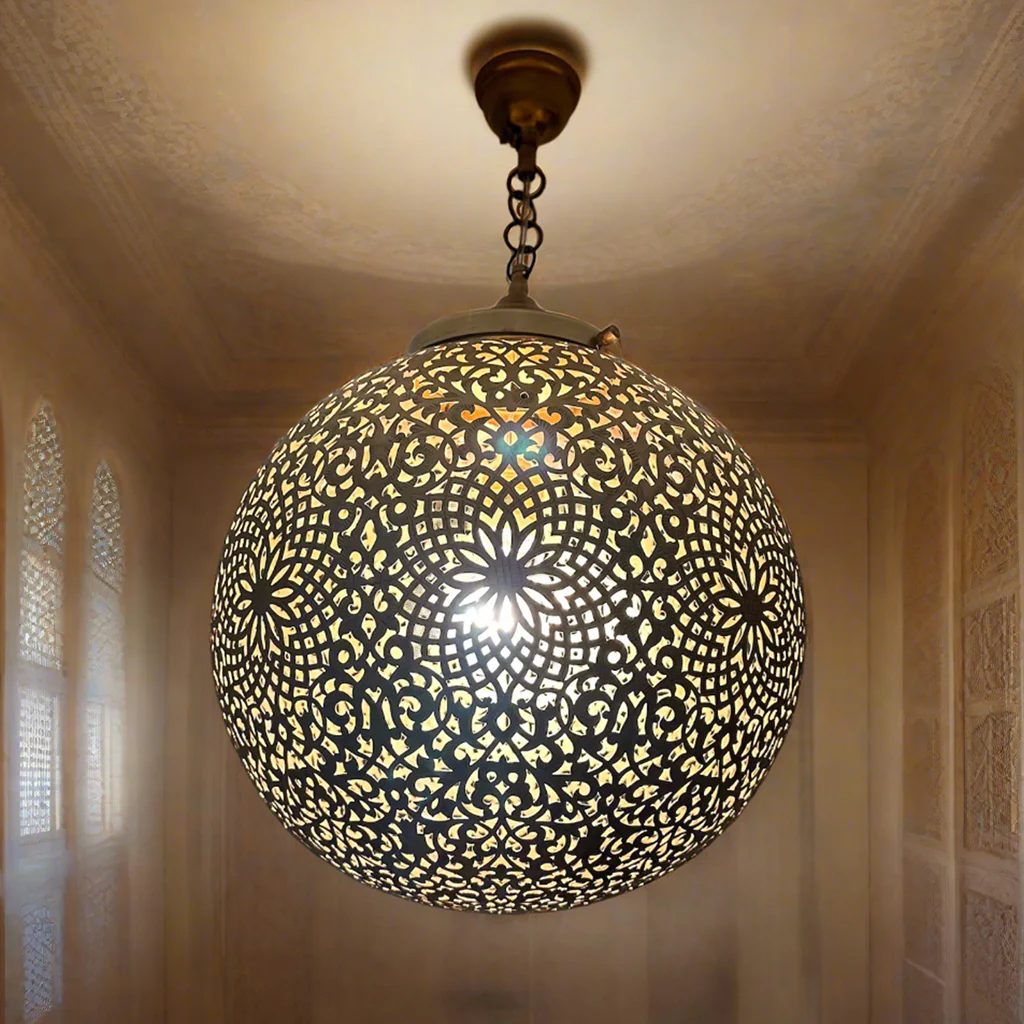
Pierced brass is not limited to traditional Moroccan interiors.
In a contemporary room, a pendant with a strong geometric form can introduce texture and visual complexity against clean lines and simple materials.
Consider a restrained palette of plaster, stone, wood, and brass. During the day, the pendant functions as a sculptural object. In the evening, its openings introduce a second layer of geometry through the light and shadow they create.
The contrast between a carefully detailed shade and an otherwise minimal interior allows the craftsmanship to become a focal point without requiring the rest of the room to follow the same decorative style.
For interior designers, this makes pierced brass an interesting choice when a space needs character but does not need more furniture, colour, or decorative accessories.
Design tip: Let the pendant have room to stand out. Avoid placing it among too many competing visual elements if the intention is to highlight its silhouette and projected pattern.
Mood Three: Atmospheric and Layered
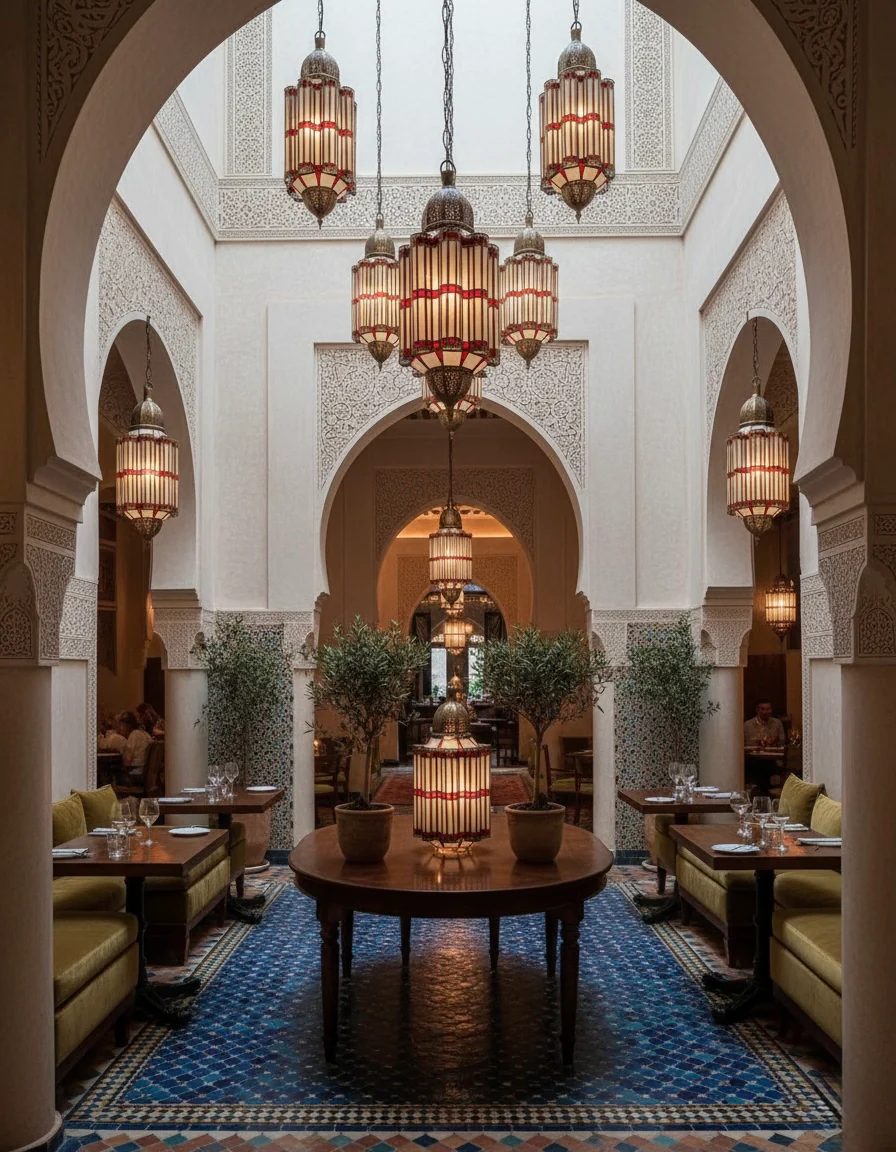
In a riad, boutique hotel, restaurant, or hospitality lounge, pierced brass lighting can contribute to the identity of the entire space.
Several pendants can create a rhythm across a room, while their patterns interact with architectural features and surrounding surfaces. The result depends on the arrangement: repeated fixtures can create visual continuity, while a single statement pendant can emphasise a reception area, dining table, or central seating space.
Layering is particularly important in hospitality interiors. Decorative pendants can establish atmosphere, while other lighting sources provide the brightness required for dining, circulation, reading, or practical tasks.
The aim is not to make every part of the room equally dramatic. It is to balance the decorative effect of the brass with the practical requirements of the space.
Design tip: Plan the pendant arrangement alongside the room’s other lighting sources. In a hotel or restaurant, consider how the space will function during daytime, evening service, and quieter hours.
4. Choosing the Right Bulb for Pierced Brass
The bulb influences both the practical performance of a pendant and the atmosphere it creates.
A pierced brass shade does not produce the same effect with every light source. Colour temperature, brightness, bulb shape, and the position of the light source can all influence the result.
Colour temperature
For a warm, relaxed interior, warm-white light around 2700–3000K is a useful starting point.
- 2700K: A warm, inviting appearance suited to intimate living spaces and many hospitality settings.
- 3000K: Still warm, with a slightly cleaner appearance that may work well in contemporary interiors.
These are starting points rather than strict rules. The appropriate choice depends on the room, the materials, the intended atmosphere, and the other light sources in the space.
Brightness
Brightness should be chosen according to the room’s function and the amount of light that passes through the shade.
A decorative pendant above a dining table may be used primarily to establish atmosphere, with other fixtures providing general illumination. A pendant in an entrance or another practical area may need to contribute more useful light.
Do not judge brightness from wattage alone. For LED bulbs, lumens provide a more useful indication of light output.
Bulb shape and appearance
The shape of the bulb can influence the visual appearance of a pierced shade, particularly if the bulb is visible through the openings.
Before choosing a bulb, confirm the fixture’s socket type, permitted wattage, physical clearance, and any manufacturer requirements. An E27 bulb may be suitable where the fixture is specified for an E27 socket, but the socket must be verified for the individual product.
BrassNoor lamps are supplied without a bulb, allowing customers to select a suitable light source for their installation.
For the best result, choose a compatible bulb that supports the intended atmosphere without compromising the fixture’s electrical requirements.
5. How High Should a Brass Pendant Hang?
Pendant height affects both the appearance of a room and the way people use it. A fixture positioned too low can obstruct sightlines or movement, while one positioned too high may lose some of its visual connection to the furniture below.
There is no single hanging height suitable for every pierced brass pendant. The correct position depends on the size and shape of the fixture, ceiling height, furniture, circulation space, and the intended use.
Above a dining table or kitchen island
A common interior-design starting point is to position the bottom of the pendant approximately 30–36 inches (76–91 cm) above the tabletop or countertop. This is a guideline, not a universal requirement.
The final position should account for the pendant’s dimensions, the height of the people using the space, the view across the table or island, and the desired lighting effect.
Larger shades may require a different visual balance from smaller ones.
In an open living area or entrance
For pendants suspended over a circulation area, ensure adequate head clearance and follow the applicable local building and electrical requirements.
The fixture’s bottom height should be considered in relation to the people walking beneath it, nearby doors, stairways, and other obstacles. High ceilings may allow a longer suspension, but they do not remove the need for safe clearance.
In hotels, restaurants, and riads
Hospitality installations require particular attention to circulation, accessibility, cleaning, and maintenance.
Where pendants hang above tables, check that they do not obstruct conversation or interfere with normal use. Where people walk beneath them, ensure safe clearance and suitable installation.
Important: These measurements are interior-design guidance, not a substitute for product-specific installation instructions or local regulations. Always follow the fixture manufacturer’s instructions and use a qualified installer when needed.
6. Can You Use a Dimmer with a Pierced Brass Pendant?
Dimming can be useful when a room serves different purposes throughout the day.
A dining area might need brighter light for preparation or cleaning and a softer atmosphere during dinner. A hotel lounge may require different lighting levels for daytime activity and evening relaxation.
However, dimming compatibility cannot be assumed simply because a pendant has a conventional bulb socket.
Three elements need to work together:
- The bulb: It must be explicitly rated as dimmable if you intend to adjust its brightness.
- The dimmer: The switch or control must be compatible with the bulb’s technology and electrical characteristics.
- The installation: The total electrical load and wiring must comply with the manufacturers’ requirements and applicable local regulations.
An incompatible LED bulb and dimmer can cause flickering, buzzing, an inconsistent dimming range, or the light switching off at low settings.
Before specifying a dimmer, check the bulb and dimmer manufacturers’ compatibility information. For projects involving several pendants or multiple lighting circuits, confirm the complete arrangement with the installer.
A dimmer can help shape the atmosphere, but it should be specified as part of the lighting system rather than assumed to be a feature of the brass pendant itself.
7. Designing with Light and Shadow
When selecting a pierced brass pendant, consider not only the shape of the fixture but also where its light will fall.
A plain wall can make the projected pattern more visible. Textured plaster may add depth to the shadows. A high ceiling may allow the light to spread across a larger area, depending on the fixture’s design and position.
The surrounding finishes matter, too. Light-coloured surfaces often make projected patterns easier to see, while darker materials can absorb more light and produce a more subdued effect.
Before finalising a design, consider:
- Which walls or surfaces will receive the pattern?
- Is the pendant intended to be the main focal point or one element in a layered lighting scheme?
- Will the light be used mainly for atmosphere, practical illumination, or both?
- How will the room look when the pendant is switched off?
- Is the fixture’s scale appropriate for the furniture and architecture around it?
For interior designers, these questions help turn a decorative fixture into a deliberate part of the room’s lighting composition.
For homeowners, they provide a practical way to choose a pendant that suits both the space and the way it will be used.
Light as Part of Moroccan Craftsmanship
Pierced brass lighting demonstrates how a material can do more than provide a surface for a lamp. Through its openings, the shade shapes the movement of light across an interior.
The effect is influenced by craftsmanship, pattern, bulb choice, room proportions, and the surfaces surrounding the fixture. No single element determines the entire atmosphere; it is the relationship between them that gives the pendant its distinctive presence.
This is what makes handmade Moroccan brass lighting interesting to explore. The object remains part of the interior during the day, while its relationship with the room changes after dark.
At BrassNoor, we see lighting as a meeting point between Moroccan metalworking, material, and contemporary interior design.
Discover Handmade Moroccan Brass Pendant Lights
A pierced brass pendant can introduce warmth, geometric detail, and a distinctive play of light and shadow into a home or hospitality interior.
Explore the BrassNoor Pendant Lights Collection to discover handmade Moroccan brass designs suited to a range of interior styles, from restrained contemporary spaces to richly layered riads and boutique hotels.
Choose a pendant for its form, consider the atmosphere you want to create after dark, and contact BrassNoor if you need guidance on the product’s finish, bulb requirements, or installation considerations.